Build Your Bali Event Brief & Request a Proposal
Tell us about your corporate event. We reply on WhatsApp with a planning brief and connect you to a vetted Bali DMC partner for venues, transport and on-ground delivery. We are an independent intelligence guide — not a DMC, PCO or venue ourselves.
Planning support is by quote, no obligation. We connect you to a vetted DMC partner for delivery. Information, not advice.
What We Cover
An independent guide to corporate events in Bali — how a destination management company (DMC) handles logistics, venues and transport for your delegates. We map the options honestly; we are not a venue, PCO or single supplier.

Incentive Travel
Explore incentives →
Conferences
Plan a conference →
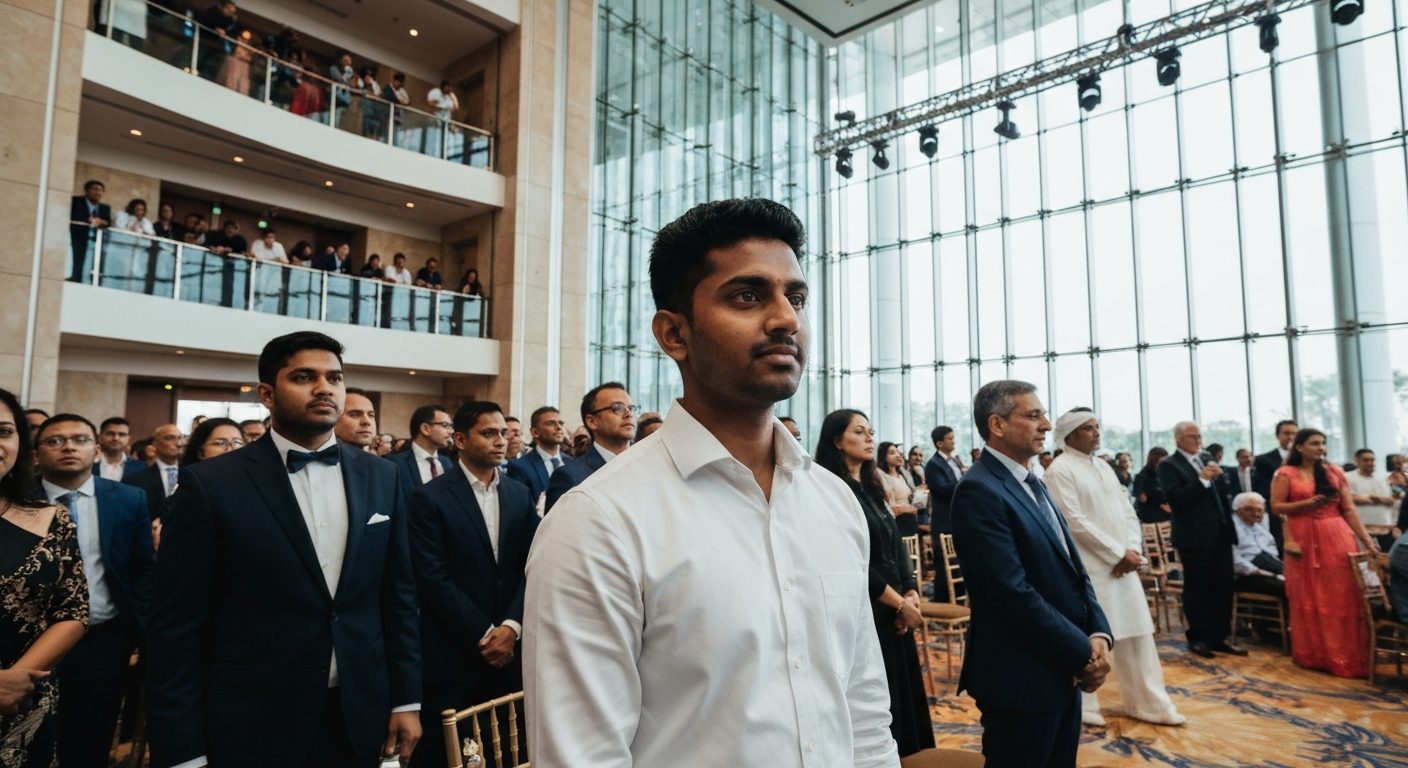
Team Building
Build a programme →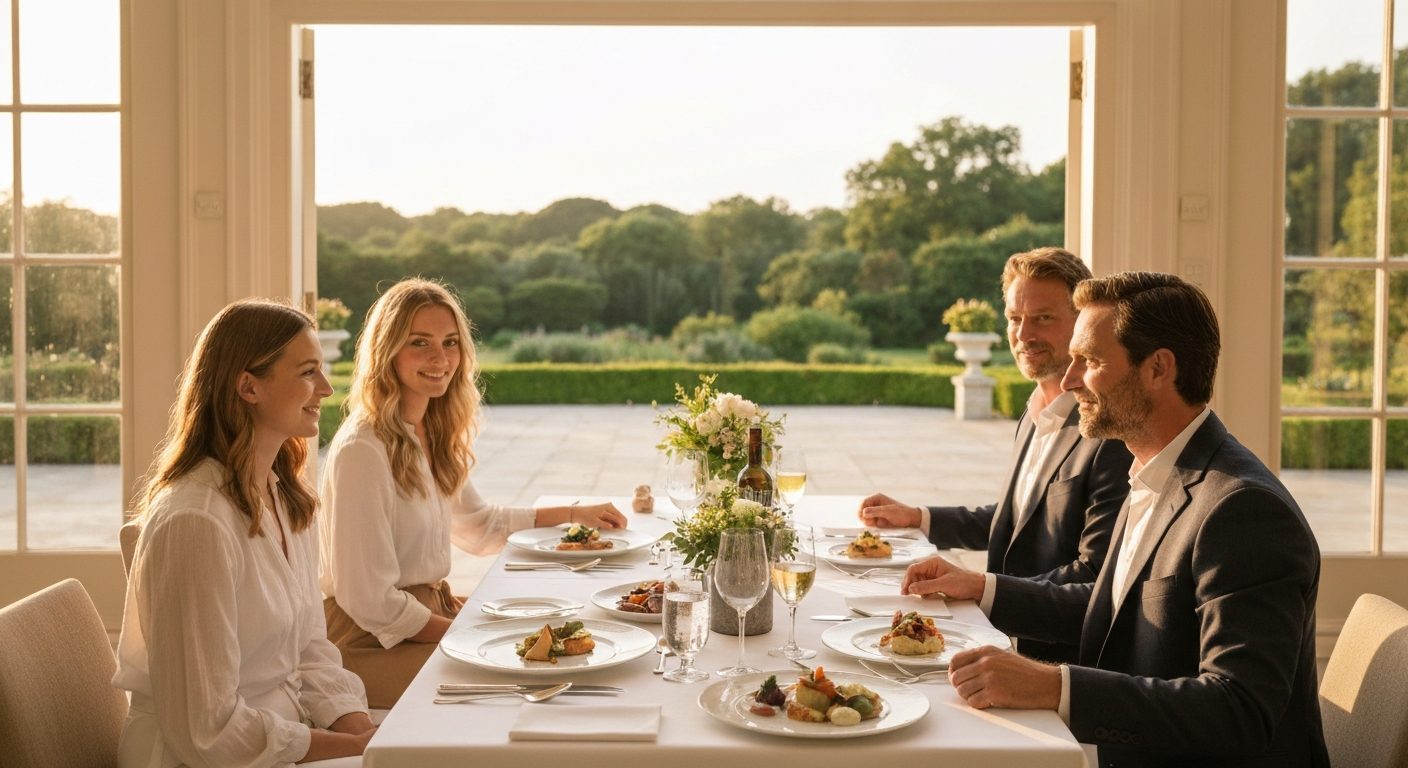
Gala Dinners
Design a gala →Plan With Confidence
The practical groundwork behind every Bali programme — venue options, moving large groups, what things tend to cost, and how a structured RFP actually works. Figures vary by season, group size and format, so most elements are scoped and costed by quote.
Venues Guide
Compare venues →
Transport & Logistics
See logistics →
Cost Guide
Understand costs →
How It Works
Read first →Why Bali DMC Agency
Independent
We are an information desk and intelligence guide for corporate buyers — not a venue, PCO or single supplier with one stock answer to sell you.
Vetted Partner
When you are ready, we connect you to a vetted local DMC and accredited suppliers who manage the logistics, venues and transport on the ground.
Honest Pricing
Programmes are scoped and costed by quote against your real brief — group size, dates, format and standard — not padded with rates we cannot stand behind.
Smart Logistics
Venues, ground transport, delegate flow and timing planned around Bali realities — traffic, distances and seasons — so the experience runs on time.
How It Works
From brief to a programme on the ground.
Tell us your need
Format, group size, dates, budget band and the standard you are aiming for — conference, incentive, team-building, gala or launch.
Curated shortlist + indicative quote
We come back with a focused shortlist of suitable venues and suppliers, plus an indicative quote so you can plan the budget before committing.
We arrange via vetted partner
You approve the direction; a vetted local DMC and accredited suppliers deliver the logistics, venues and transport. We guide; they execute.
A Bali DMC — Destination Management Company — is a local ground-handling specialist that uses its supplier relationships and on-the-ground knowledge to design and operate business-event programs inside a single destination. In practice that means airport transfers, hotel and venue sourcing, off-site excursions, on-site staffing, vendor management and the thousand small logistics decisions that determine whether 200 delegates have a smooth, well-run experience or a frustrating one. Bali DMC Agency is not one of them. We are an independent editorial guide for corporate buyers — we do not sell, operate or staff events, we do not represent any venue, and we have no inventory to move.
What to Expect on Scale, Venues and Budget
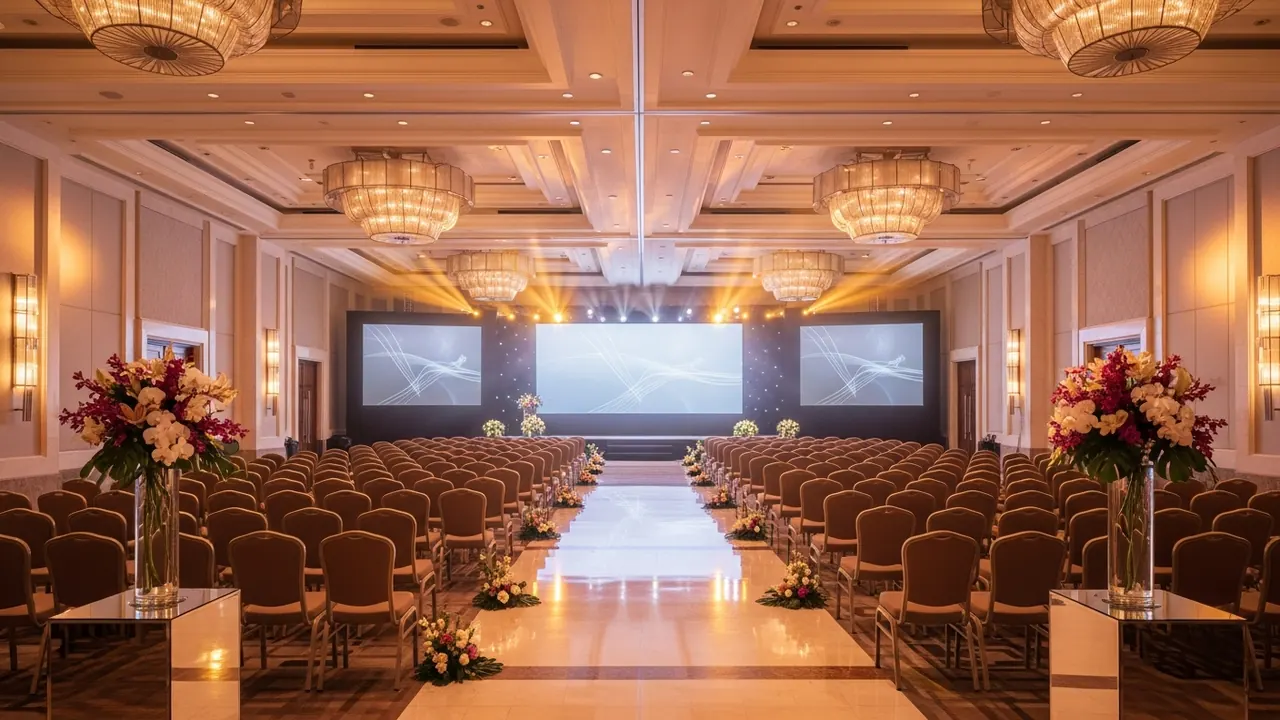
Our team tracks Bali’s MICE supply across convention space, resorts and offsite venues, and we recommend planners scope against real capacity facts rather than brochure superlatives. For context, the Bali Nusa Dua Convention Center’s main hall is around 4,400 sqm and seats roughly 5,000 theatre-style (venue-issued figures), while large outdoor galas at Garuda Wisnu Kencana’s Lotus Pond have hosted several thousand guests [VERIFY exact capacities with each venue]. Group sizes we see briefed range from intimate incentives of 20–50 up to conferences of several hundred, and every cost is by quote — it moves with group size, season, venue, production and transfer distance. Bali hosted G20 in November 2022 and the IMF–World Bank meetings in 2018 at Nusa Dua, which is why the destination carries genuine large-event infrastructure. Delegate visas, event permits and tax treatment are your responsibility to confirm with the relevant authorities — this is general information, not professional event-planning or legal advice. When you are ready, we route your RFP to a vetted DMC partner on WhatsApp +62 811 3941 4563; our help is free and they may pay us a referral fee at no extra cost to you.
What we do: publish plain-English intelligence so that procurement leads, executive assistants, HR and marketing planners, and overseas agencies can brief, budget and vet Bali suppliers with confidence before they sign anything. When a reader is ready to execute, we route that enquiry to one vetted, accredited local partner and disclose that referral relationship openly. No one can pay to change what we publish; if you use our free help and proceed with a partner, they may pay us a referral fee at no extra cost to you.
Everything on this site is general information, not legal, financial, tax, immigration or professional advice. Where a figure is unconfirmed, we flag it. Where a rule changes frequently — and in Indonesian permitting and immigration, many do — we direct you to the primary source.
What Does a Bali DMC Actually Do?
The label gets used loosely in the market, so it is worth being precise. A Destination Management Company operates locally, in one geography, and its core value proposition is the supplier network and operational depth that a distant corporate buyer or overseas agency simply cannot replicate from an office in Singapore or Sydney. A Bali DMC handles:
- Airport transfers and delegate logistics — meet-and-greet at Ngurah Rai International (DPS), coach or VIP fleet coordination, luggage marshalling, rooming lists
- Venue sourcing and contracting — matching event format and headcount to the right venue type, negotiating on the buyer’s behalf, managing the RFP response
- Off-site events and activities — team-building programs, cultural excursions, gala dinners at cliff-top or beachfront venues, CSR projects
- On-site staffing and operations — event managers, registration desks, floor staff, AV liaison, banjar and permit coordination
- Supplier management — coordinating caterers, florists, AV/production houses, entertainers, transport companies and photographers under one managed contract
A DMC is not the same as a PCO. A Professional Conference Organiser manages an entire conference end-to-end — strategy, registration systems, scientific program, delegate marketing, exhibition and sponsorship sales, financials — often working across multiple destinations and subcontracting the local ground-handling to a DMC. A generic event organizer focuses on creative production and staging and may not include group travel logistics at all. These distinctions are industry convention, not legal definitions, and vendors routinely blur the labels to win the whole scope. That ambiguity is precisely why a non-vendor explainer is useful before you brief anyone.
Who This Site Serves
The Bali MICE search landscape is roughly 95 percent vendor self-promotion. Type almost any related phrase into Google and you will land on a DMC’s own website, a tour operator calling itself a “full-service corporate events specialist,” or an aggregator whose independence is not disclosed. What the SERP lacks is buyer-side intelligence: honest cost ranges, verified venue specs, clear RFP frameworks, and candid assessments of what Bali can and cannot do.
Bali DMC Agency was built to fill that gap. We serve:
- Procurement and finance leads who need a cost model that itemizes components honestly before they approve a budget
- Executive assistants and EAs coordinating incentive trips or executive retreats for senior leadership
- HR and L&D managers planning team-building programs and reward travel for sales or operations cohorts
- Marketing and brand managers scoping product launches, roadshows or media events with a Bali backdrop
- Overseas PCOs and agencies in Singapore, Australia, Japan, the UK or the US who need Bali ground-handling intelligence without picking a local DMC blind
Here is what you can do on this site: understand how the Bali DMC and MICE category actually works; model budgets against by-quote cost ranges broken down by component; evaluate venue types by headcount and event format rather than by a vendor’s curated shortlist; build and submit an RFP using our framework; and vet supplier accreditation against the relevant Indonesian industry bodies. At the end of that process, if you want an introduction to a local operator, we make one — and we tell you we do.
Bali as a Corporate Events Destination: The Verified Case
Buyers often ask how Bali stacks up globally before they commit to the destination. Here is what the evidence actually supports, with appropriate caveats.
The Infrastructure
The centrepiece of Bali’s convention capacity is the Bali Nusa Dua Convention Center (BNDCC) in the Nusa Dua precinct. Its largest hall — the Nusa Dua Hall — is a pillarless space of 4,400 sqm with a theatre-style capacity of up to 5,000 delegates, per venue-issued specifications. BNDCC is listed by industry sources as having 44 multi-functional rooms [industry-listing figure; treat as indicative, verify with venue directly]. Do not confuse BNDCC with the separate Bali International Convention Center (BICC) at the Westin Nusa Dua, which was built for the 1992 Non-Aligned Movement Summit and operates as a distinct facility.
For outdoor gala events, Garuda Wisnu Kencana (GWK) Cultural Park in Ungasan sits on approximately 60 hectares, around 263 metres above sea level and 10 to 15 minutes from Ngurah Rai airport. Its Lotus Pond plaza is conventionally cited in event industry materials as capable of hosting up to 7,000 guests for standing events [multi-source figure; the underlying area claim of 4,400 sqm is single-source — verify with GWK directly before quoting in a brief]. The park’s amphitheatre is cited at roughly 800 seats [effectively single-source — flag and verify]. Beyond these two anchor venues, Bali offers beach clubs, cliff-top lawns and hotel ballrooms across multiple precincts that are genuine event venues — but we describe those by type and use rather than publishing hard headcount figures, because no independent neutral-source capacity data exists for them.
Proven at Scale
Two verified mega-events establish Bali’s credential for large, security-sensitive gatherings:
- G20 Leaders’ Summit, November 2022 — held in Nusa Dua, Bali, with plenary and key bilateral meetings at BNDCC and adjacent venues. Verified across multiple primary sources.
- IMF–World Bank Annual Meetings, 8–14 October 2018 — Nusa Dua, Bali, core program at BNDCC and nearby venues. Verified via IMF, World Bank and ITDC sources.
These are meaningful proof points because they demonstrate that Nusa Dua’s venue cluster, accommodation stock and security logistics can absorb global-tier events. They do not tell you what a 150-delegate pharmaceutical conference will cost, or whether a beachfront gala for 400 will get the noise permit it needs. Those questions have different answers, and that is what the rest of this site addresses.
ICCA Rankings: What They Mean and What They Do Not
According to ICCA 2023 data — released in 2024 and reported by TTG Mice and Mix Meetings citing ICCA — Indonesia ranked 37th globally with 98 international association meetings, and Bali ranked approximately 10th among Asia-Pacific cities in that dataset [VERIFY: absolute meeting counts show a minor discrepancy between outlets, though relative positions are consistent; ICCA full tables are paywalled].
For context, the Asia-Pacific city ranking is led by Singapore, Seoul and Bangkok. Kuala Lumpur also sits in the AP top 10. Thailand ranked 25th globally (158 meetings) and Singapore 27th (144 meetings) in the same data. Bali’s position around 10th in the AP city ranking reflects genuine meeting activity, not just resort tourism — but it is not a top-tier convention hub on the level of Singapore or Seoul. Buyers choosing between Bali and those cities for a large pure-convention format should factor in the difference in direct flight lift and specialist PCO infrastructure. Buyers choosing Bali for an experience-led incentive, mid-size conference or team-building program are operating in a segment where Bali competes differently.
One more point on government positioning: Indonesia’s Ministry of Tourism and Creative Economy (Kemenparekraf) treats MICE and business events as a priority tourism segment under the “Wonderful Indonesia” brand. That is accurate and worth knowing. What it does not mean is that MICE is legally designated as a “super-priority sector” — that designation applies to five named destinations (Borobudur, Mandalika, Labuan Bajo, Likupang and Lake Toba). Bali is Indonesia’s main tourism hub; it is not one of those five.
Bali MICE: The Honest Tradeoffs
Every destination has a best-fit and a worst-fit use case. Here is our candid read.
- Bali is strong for
- Experience density — culture, wellness, outdoor team-building and beach/cliff gala formats are available within short transfer distances of each other, which matters for multi-day incentive programs. Mid-size conferences of roughly 50 to 800 delegates have a credible venue range. The destination motivates qualifiers in a way that generic hotel meeting rooms in Singapore or Jakarta do not. Cost per delegate can be materially lower than comparable programs in Australia, the UK or Western Europe, though the “half the price of Singapore” shorthand circulates in the market as a broadly-repeated claim, not a verified figure.
- Bali is weaker for
- Pure convention formats at scale, where Singapore, Kuala Lumpur or Seoul offer stronger direct flight lift from global hubs, larger dedicated convention infrastructure and a deeper specialist PCO ecosystem. Peak-season inventory — particularly premium beachfront buyouts and large hotel room blocks — can tighten materially in high-demand periods, which affects both availability and pricing. Over-tourism in key precincts affects delegate experience in ways that are hard to mitigate with event logistics alone.
- Season matters more than buyers expect
- Bali’s dry season runs roughly April through October; the wet season November through March. That is standard climatology, not a guarantee. Outdoor galas and beach events in the wet season need weather backup plans — not a dealbreaker, but a budgeting and logistics variable. Nyepi, the Balinese Day of Silence, shuts down the island including the airport for approximately 24 hours each year; the exact date shifts annually and must be verified for any Q1 program.
A Guide to Bali MICE Venues by Type
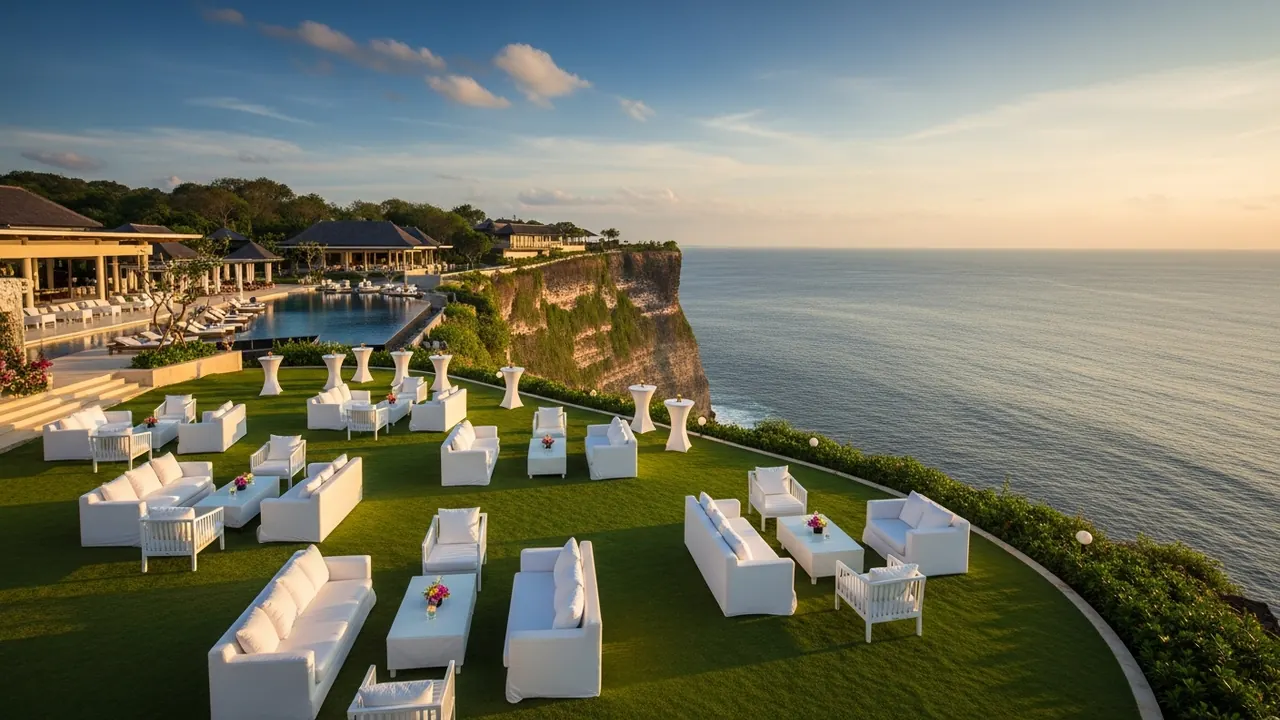
The venue question is where buyers most need neutral intelligence. Vendor sites present a curated shortlist of “preferred partners” without disclosing the commercial relationship. We describe venue types by format and operational fit instead.
Large Convention and Conference Venues
BNDCC in Nusa Dua is Bali’s primary dedicated convention facility, with the pillarless Nusa Dua Hall (4,400 sqm, up to 5,000 theatre-style, venue-issued and verified) as its headline space. The BICC at the Westin is a separate convention building in the same Nusa Dua cluster. Nusa Dua’s advantage is accommodation density — several large resort hotels sit within the same precinct, which reduces delegate transfer logistics and enables efficient room-block-plus-venue-plus-dinner clustering.
Hotel Ballrooms
Bali’s five-star resort hotels in Nusa Dua, Jimbaran and Seminyak carry ballrooms suitable for conferences and galas in the 200 to 1,500 delegate range. Capacities vary by layout; buyers should request venue-issued theatre, cabaret and banquet configurations in writing rather than relying on marketing brochures. Ballrooms offer climate control, in-house catering and AV infrastructure — the trade-off is a more formal, less characteristically Balinese environment.
Outdoor and Cultural Venues
GWK Cultural Park’s Lotus Pond and the Amphitheatre (specifications noted above, verify directly) are the most commonly cited options for large outdoor galas. The park’s elevation and landmark statue create a distinctive visual backdrop. Operational constraints at outdoor venues — noise curfews, load-in windows, weather contingency, banjar consent and police crowd clearance — are genuine planning variables, not formalities. Work through these with a DMC that has operated events at the site before.
Beach Clubs and Cliff Venues
Venues in the Uluwatu, Jimbaran, Seminyak and Canggu precincts — including names well-known in the market such as Savaya Bali (formerly Omnia), Karma Kandara, AYANA, Potato Head, Finns Beach Club and Atlas Beach Club — are genuine event-capable venues. We describe them by type and use. We do not publish headcount capacities because no independently verifiable neutral-source figures exist for these spaces. Any number you see in a marketing deck is an operator estimate. Ask the venue for a formal seated layout and verify it against your event format and minimum spending requirement.
Cost Ranges: Why We Do Not Publish Fixed Prices
A Bali MICE budget is assembled from variable components, and the interaction between those components makes any published per-head price figure either misleading or so broad as to be useless. The cost drivers are:
- Headcount — unit economics shift at roughly 50, 150 and 500 delegates
- Venue tier and format — a ballroom buyout at a five-star resort is a structurally different cost line from a beach club hire
- Room block — whether delegates are in-house or bussed in is one of the biggest single variables
- F&B scope — plated gala dinner versus cocktail reception versus all-day delegate packages are distinct catering economics
- AV and production — a lectern and screen versus a full LED wall, lighting rig and live entertainment are not the same order of magnitude
- Activities and team-building — half-day cultural workshop versus multi-activity off-site day
- Season — peak-period pricing for accommodation and some venues is materially higher; precise premiums vary and should not be quoted as fixed
- DMC fee or margin — typically a disclosed percentage or cost-plus model; ask which model applies and request full itemisation
- Permits and compliance costs — police permit fees, banjar contributions, noise/environmental sign-offs, and for events with foreign talent, impresario and work-permit fees
All costs on this site are presented as ranges and are marked “on quote” precisely because any fixed figure would misrepresent. Our Bali MICE cost guide walks through the component model in detail. Our RFP framework shows you how to structure a brief that gets itemized, comparable responses.
Ready to start scoping? Use our enquiry form or reach us on WhatsApp at +62 811 2859 0000 and we will help you build a structured brief and route it to a vetted local partner.
Permits, Visas and Compliance: The Basics
This section is general information only, not legal, immigration or compliance advice. Rules change; nationality-specific rules vary; always verify current requirements with the Indonesian Directorate General of Immigration and relevant permitting authorities before finalising plans.
Delegate Visas
Business visitors from most nationalities can enter Indonesia on a Visa on Arrival or e-VOA, typically valid for up to 30 days with one extension available. A single-entry business e-visa (commonly the B211A type) is also available, often up to 60 days, but requires an Indonesian sponsor. The legally significant distinction between passive conference attendance and active work — speaking, facilitating, advising — can affect which visa category applies and is a case-by-case determination. Do not assume a tourist VOA covers delegate activity without checking.
Event Permits
Private, closed-door hotel events are typically handled by the venue or DMC as part of normal operations. Large, public or outdoor events generally require a location permit, police security and crowd-control clearance (classified by event scale through local Polsek, Polres or Polda levels), noise and environmental approvals, and — in Bali specifically — banjar or village-council consent. There is no published numeric threshold of the form “X guests triggers permit Y”; practice varies by regency (Badung, Denpasar, Gianyar). An environmental and trash-removal plan is now commonly required as part of the permit package for outdoor events. Working with a DMC that has existing relationships with local authorities is the practical path through this.
Foreign Talent
Bringing in overseas performers, DJs, MCs or specialist crew requires a licensed Indonesian impresario plus work-permit notification to the relevant authority, and typically needs around one month of lead time. A tourist visa is not sufficient for working talent. Build this into your production timeline early.
How Bali DMC Agency Works
The process is designed for corporate buyers who want to arrive at a briefing-ready position before they engage any supplier:
- Research and scope — use the guides, cost frameworks and venue intelligence on this site to define your event format, approximate headcount, target season and budget posture
- Build your RFP — our RFP guide walks you through what a complete brief should contain and what an itemised quote must show for a fair comparison
- Request an introduction — contact us via our enquiry form or WhatsApp; we will qualify your brief and route it to one vetted, accredited local partner, disclosing our referral relationship
- Evaluate and decide — the partner provides a quote; you own the decision
We do not bid on events, quote for events or operate events. We are not the DMC. The independence of what we publish and the referral arrangement with the partner are kept separate by design, and we tell you about both.
The Bali Corporate Events Guide: What to Read Next
Depending on where you are in the planning cycle, these are the most useful next stops on the site:
- Bali MICE services explained — full breakdown of meetings, incentives, conferences, exhibitions and events, and who in a company typically owns each type
- Venue guide by event type and headcount — the neutral venue matrix: convention halls, hotel ballrooms, outdoor and beach options by precinct and format
- Bali MICE cost guide — honest, itemised cost-per-delegate model and the hidden cost variables that vendor quotes often obscure
- RFP framework — what a complete brief contains, what a complete quote must itemise, and how to compare responses fairly
- Permits and delegate visas — plain-English overview of the compliance layer, flagged throughout as information not advice
- Why Bali for MICE — the balanced destination assessment, including where Bali loses to Singapore or KL and where it wins
Frequently Asked Questions
What is a Bali DMC and how is it different from a PCO or event organiser?
A DMC (Destination Management Company) is a local ground-handling specialist that designs and operates programs within one destination — transfers, venue sourcing, off-site events, on-site staff and vendor coordination. A PCO (Professional Conference Organiser) manages an entire conference lifecycle across potentially multiple destinations, often subcontracting local logistics to a DMC. A generic event organiser focuses on creative production and may not include group travel. These distinctions are industry convention, not legal definitions, and vendors often blur them — which is why reading an independent explainer before briefing is worthwhile.
Is Bali capable of handling large international corporate events?
Yes, with evidence. Bali’s Nusa Dua precinct hosted the G20 Leaders’ Summit in November 2022 and the IMF–World Bank Annual Meetings in October 2018 — both verified at primary level. The Bali Nusa Dua Convention Center’s largest hall seats up to 5,000 delegates theatre-style (venue-issued specification). ICCA 2023 data places Bali approximately 10th among Asia-Pacific cities for international association meetings [VERIFY via TTGmice or ICCA directly; full tables are paywalled]. That is credible but not top-tier — Singapore, Seoul and Bangkok rank ahead.
How much does a corporate event in Bali cost per person?
All costs are by-quote, and the range is wide because a Bali MICE budget is assembled from variable components: venue, room block, F&B, AV and production, transfers, activities, DMC margin, permits and contingency. None of these are fixed-price items. A half-day team-building workshop for 50 people is a fundamentally different cost structure from a three-day conference for 800 with a gala dinner at a cliff venue. Our cost guide walks through the component model so you can build a realistic range before sending an RFP.
Do international delegates need a visa to attend a conference in Bali?
Most nationalities can enter Indonesia on a Visa on Arrival or e-VOA for up to 30 days, extendable once. A single-entry business e-visa is available for up to 60 days with a local sponsor. The distinction between passive attendance and active work (speaking, facilitating, running workshops) can change the required visa category — this is a case-by-case legal determination. Nationality lists, fees and durations change; always verify current requirements with the Indonesian Directorate General of Immigration. This is general information, not immigration advice.
How do I get started planning a Bali corporate event or incentive trip?
Use this site to understand the category, model a realistic budget range, and build a structured brief using our RFP framework. When you are ready for a supplier introduction, reach us via our enquiry form or WhatsApp at +62 811 2859 0000 — or email [email protected]. We will qualify your brief and connect you to one vetted, accredited local partner, with that referral relationship disclosed. No commitment is required at the enquiry stage; quotes and event decisions remain entirely with you and the partner.